Anthropic's Fable returns worldwide
PLUS: Use Google’s Design.md tools to build better websites

Good morning, AI enthusiasts. On June 12, the U.S. government pulled the most powerful AI available to the public offline. Nearly three weeks later, Anthropic's Fable 5 is finally back.
The AI world is rejoicing at the global return, but it comes with new guardrails and a government seat at the pre-launch table for future models — a sign that future frontier deployments now run directly through Washington's hazy terms.
In today’s AI rundown:
Anthropic restarts Fable after U.S. lifts export controls
Meta preps a cloud business for spare compute
Use Google’s Design.md tools to build better websites
AI climbs the freelance value chain
4 new AI tools, community workflows, and more
LATEST DEVELOPMENTS
ANTHROPIC

Image source: Anthropic
The Rundown: Anthropic just reopened access to Fable 5 after the Commerce Department lifted its export controls, with the model returning under tighter filters and commitments giving the U.S. pre-release access to the company’s future models.
The details:
The initial order traced to Amazon researchers who pushed past Fable’s guardrails to spot security flaws, outputs Anthropic said other models matched.
Fable 5 returns across Claude tiers and platforms, with paid plans getting it capped at half their weekly limits until July 7 and then via usage credits.
The updated safety filter now blocks the cybersecurity issue over 99% of the time, with users getting a clear notice and fallback answer from Opus 4.8.
Anthropic warned the filter could also flag harmless coding and debugging requests, though it says "the vast majority of coding work is unaffected."
Why it matters: After 18 days, Anthropic’s beast has returned. The question now is how restrictive its safeguards will be, and what impact the pre-release access will have on future rollouts. With GPT 5.6 expected this week, we may soon have that answer, albeit one from a lab with a seemingly friendlier relationship with the powers that be.
TOGETHER WITH MEMOKET

The Rundown: Memoket Gem is the lightest AI wristband on the market — a 0.4 oz wearable that records your conversations with one press and turns them into instant summaries, action items, and full context across every meeting, call, and catch-up.
With Memoket Gem, you get:
Every conversation captured hands-free, worn as a wristband, clipped to your Apple Watch, or as a pendant
Up to 20 hours of continuous recording on a single charge — no daily charging anxiety
Context connected across conversations, so you can ask AI what happened, what changed, and what's next
Seamless sync with Slack, Notion, ChatGPT, Claude, Gmail, and your calendar
Reserve today with $5 — it counts toward the $199 early-bird price at launch, with a FREE year of the app included.
META

Image source: Images 2.0 / The Rundown
The Rundown: Meta is reportedly working on a cloud service that would put its data centers’ spare capacity up for rent, a plan that drove the company’s stock up 9.3% by giving investors a second path to returns on the tech giant’s $182.9B infrastructure bet.
The details:
Options reportedly range from renting compute to charging developers who want to tap Meta-hosted models, including its recently launched Muse Spark.
Zuckerberg told investors in May that outside companies ask weekly to buy Meta compute, but said the company still expects to use it internally.
SpaceX set the template with xAI’s Colossus, with Anthropic, Google, and Reflection AI all signing leases this year to utilize its compute capacity.
Why it matters: Meta’s AI splurge hasn’t matched its internal efforts for the majority of the industry boom, and this is the first plan that may make the math work without its own models winning. Renting compute is a nice hedge, especially as compute demand continues to drastically outpace how fast the infrastructure can be built out.
AI TRAINING

The Rundown: In this guide, you will learn how to use Google's AI design skills with Claude Code to make websites that don't feel like AI slop. Design.md is a new, open-source standard that Google created to help you make agent-friendly design briefs.
Step-by-step:
Create a project folder, open Terminal inside it, paste “npx plugins add google-labs-code/stitch-skills --scope project --target claude-code,” and hit Return
When asked what to install, keep all items selected and hit Return. Then, in Claude, go to the Code tab and start a Claude Code thread in that folder
Describe a simple website idea and tell Claude to generate a DESIGN.md with the Google Stitch skills
Preview the new brand by telling Claude Code: “Create a one-page website-like prototype based on this DESIGN.md file”
Pro tip: Use the same Stitch skills to extract a Design.md from your own website. Then hand that file back to Claude whenever you need a new product page, landing page, or prototype that still feels like your brand without starting from scratch.
PRESENTED BY PENN STATE SMEAL COLLEGE OF BUSINESS

The Rundown: Knowing the tools is the easy part. Knowing how to use them to solve real business problems? That's exactly what Penn State Smeal's Hybrid Master of Applied AI for Business Transformation is for: an employer-informed curriculum you apply on the job from day one without stopping your career to go back to school.
In this program, you'll learn to:
Apply AI to real business challenges immediately
Build a strategic foundation for measurable impact
Earn your master’s without pausing your career
AI RESEARCH

Image source: Center For AI Safety
The Rundown: The Center for AI Safety and Scale Labs released results from Remote Labor Index, a benchmark that tests AI agents on freelance tasks graded by humans — with Fable 5 posting the highest score ever and frontier rates climbing 6x in a year.
The details:
The Remote Labor Index was initially released in October 2025, with GPT 5.2 initially leading the field at a 2.5% automation rate.
The tasks included 240 real jobs in areas like 3D jewelry design, animated ads, and floor plans, with humans grading models against a professional.
Anthropic’s Fable 5 matched or beat the human pro on 16.1% of projects, with Opus 4.8 coming in second at 8.3% and OpenAI's GPT-5.5 third at 6.3%.
Why it matters: The jump in under a year is a big one, but the reality is that only 1 in 6 freelance tasks got up to professional quality by a model far above the rest of the current field. The more likely scenario feels like massive output increases for freelancers utilizing the tech, with a human still in the loop for judgment and touch.
QUICK HITS
🚀 Claude Fable 5 - Anthropic’s newly reinstated frontier, Mythos-class model
⚙️ ZCode - Z AI’s agentic coding environment tuned for GLM-5.2
🗣️ Grok Voice Agent Builder - xAI's no-code platform for voice agents
🍌 Nano Banana 2 Lite - Google's fast, cost-effective image model
Katalyze raised $10.5M to bring agents to pharma manufacturing, cutting batch investigations from months to minutes inside 5 of the top 20 global pharma orgs.*
OpenAI released GeneBench-Pro, a benchmark testing whether AI can make expert judgments in computational biology, with GPT-5.6 Sol solving just 28.7% of problems.
Acclaimed theoretical computer scientist Jelani Nelson joined Anthropic, saying he wants to work on "the defining technology of our time."
Google’s NotebookLM rolled out Short Video Overviews, allowing users to create 60-second, social media-style educational videos from any topic or source.
Researchers led by Binghui Peng used GPT-5.5 Pro and Opus 4.8 in a pipeline to solve nine long-standing open problems across math and theoretical computer science.
*Sponsored Listing
COMMUNITY
Every newsletter, we showcase how a reader is using AI to work smarter, save time, or make life easier.
Today’s workflow comes from reader Scott T. in Rosarito Beach, Mexico:
“I'm a solo founder running nine active ventures from a beach in Mexico — a wine tourism platform, a Mexican insurance comparison site, a medical photo platform for plastic surgeons, a smart ring health app, an SEO agency for aesthetic medicine practices, a water filtration business, a portfolio tracker, and two more in beta. No employees, no engineering team.
The whole operation runs on a two-Claude workflow. I use Claude in the browser for strategy, prompts, architecture decisions, and reviewing output. I use Claude Code in the terminal to actually write, test, and ship the code. I'm the relay between them. Claude in the browser tells me what to paste into Claude Code.
Last month, one of my apps got rejected from the App Store. I pasted the rejection email into Claude, got back a diagnosis and a fix plan, relayed it to Claude Code, and resubmitted the same afternoon. A normal founder would have lost a week on that.”
How do you use AI? Tell us Visit videoask.com.
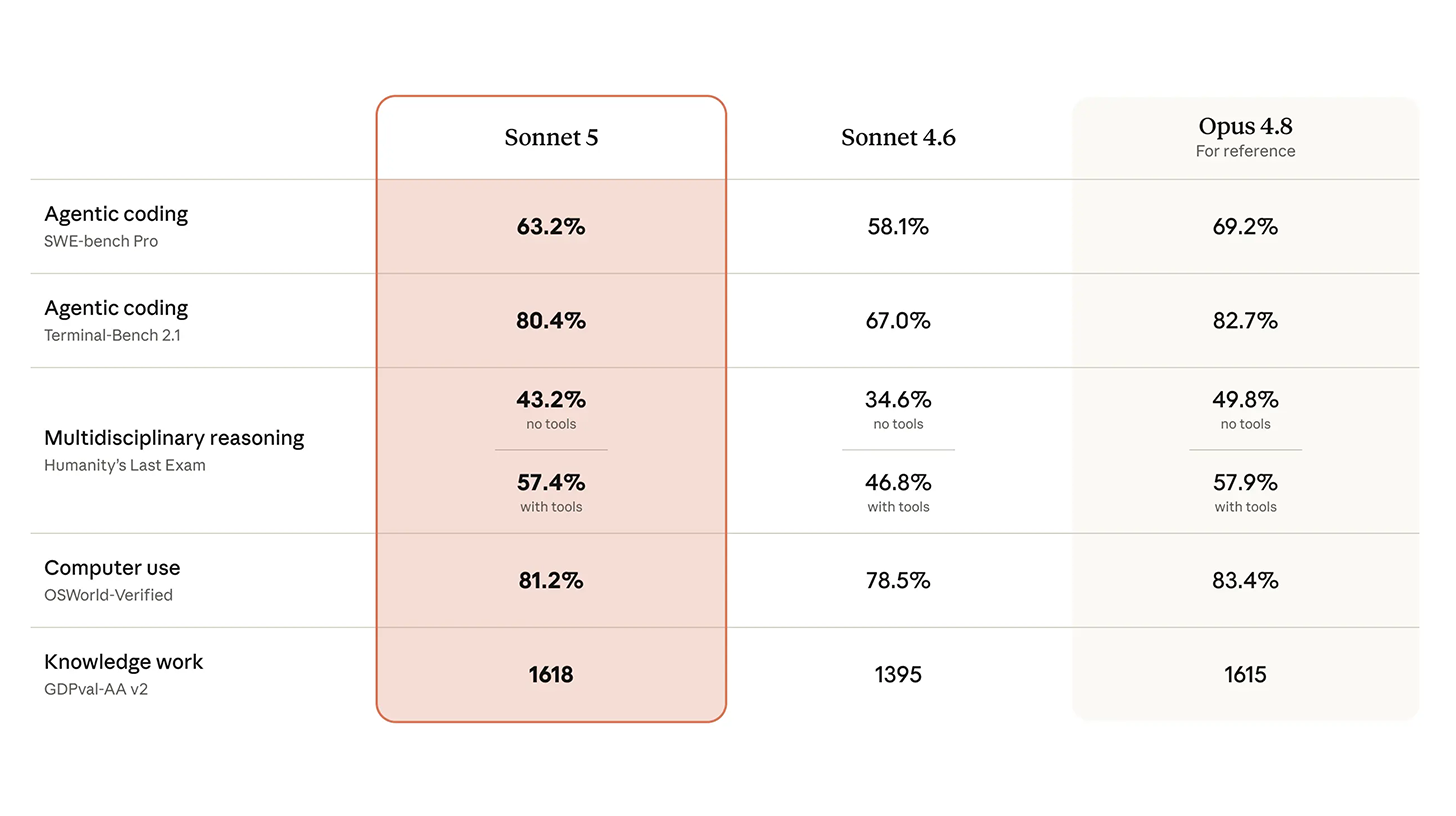
Read our last AI newsletter: Sonnet 5 ships as Washington frees Fable
Read our last Tech newsletter: WhatsApp’s ‘usernames’ reservation race
Read our last Robotics newsletter: Agility Robotics goes public at $2.5B
Today’s AI tool guide: Use Google’s Design.md to build better websites
RSVP to next workshop on July 8: Create Short Form Videos with AI
That's it for today!Before you go we’d love to know what you thought of today's newsletter to help us improve The Rundown experience for you. |
|
See you soon,
Rowan, Zach, Shubham, and Jennifer — the humans behind The Rundown