Your AI cheat sheet for Thanksgiving dinner
PLUS: Use Gemini Tasks to hunt for Black Friday prices

Good morning, AI enthusiasts, and welcome to our 4,638 new readers. Thanksgiving is here, and for many of us, that means plenty of catching up around the dinner table. If the conversation goes anything like the news cycle, AI may be a main course.
Last year, that might’ve meant explaining ChatGPT to a relative. This year, the questions are about the Chinese spy saga, everything being hacked, data centers, and more. Choose your seat wisely!
In today’s AI rundown:
Your AI cheat sheet for Thanksgiving dinner
What five cents builds now with AI
Check Black Friday prices with Gemini Tasks
Anthropic CEO claps back at Axios ‘free will’ report
LATEST DEVELOPMENTS
AI & THE HOLIDAYS

Image source: Images 2.6 / The Rundown
The Rundown: AI is probably going to come up in discussion around the table during the holidays, and this month provided plenty of material. Here’s your cheat sheet for some of the questions most likely to get dished out, with explanations to help you feel like the AI expert in the room.
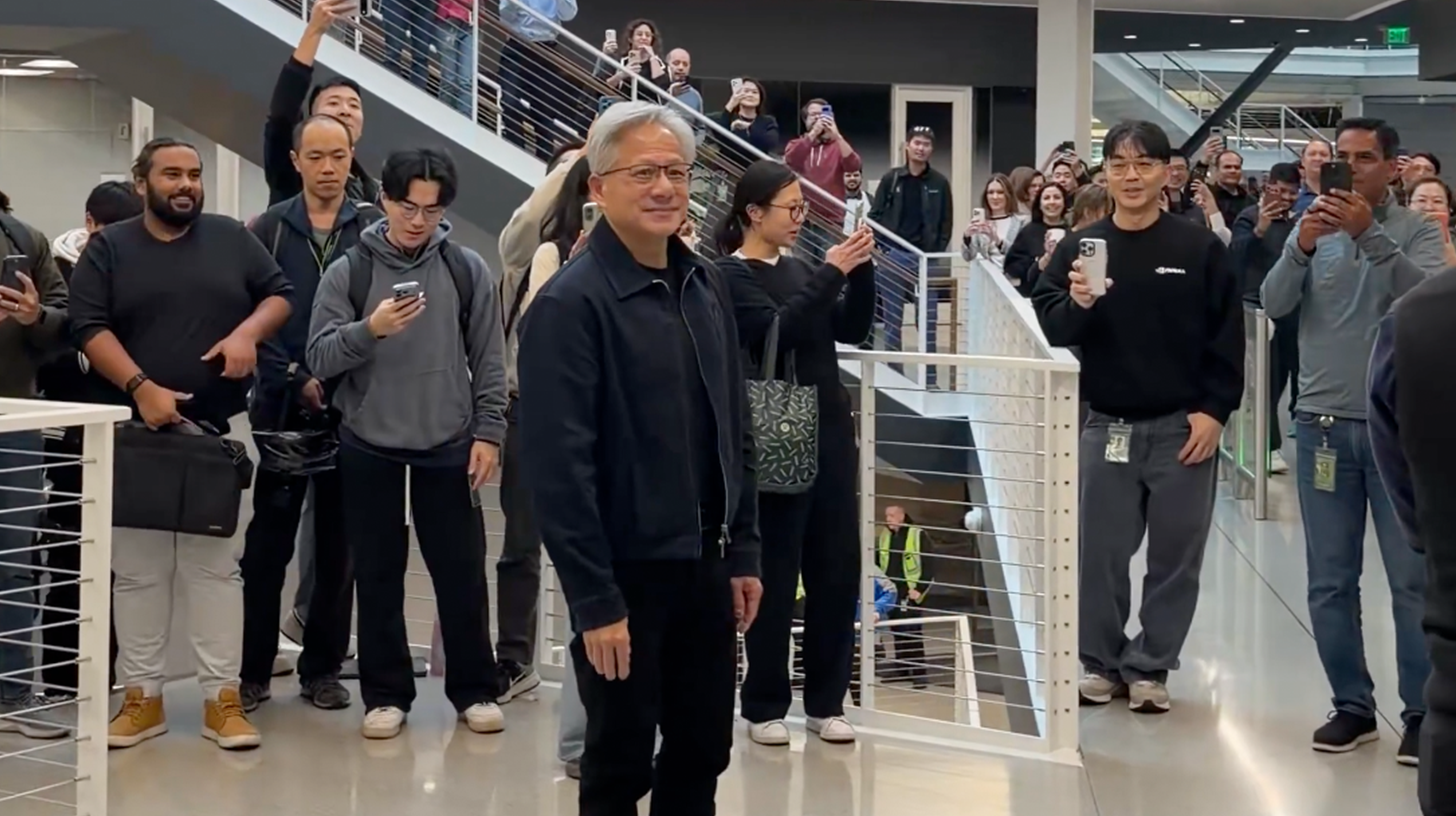
Q: What’s going on with Nvidia and Jensen Huang? Was he really having an affair with a spy?
A: Jensen was out, and now he’s back, with some lobbying from the President playing a role. Nvidia’s stock saw $1T in value added on his return, and lawmakers are furious — and ready to hold his feet to the fire in hearings starting on Dec. 3.
As for his affair with Alice Huang, her spy ties are looking less clear by the day. Despite early reporting, U.S. officials reportedly have no proof she was told to pry secrets from Jensen, though she was in touch with Chinese intelligence. The bigger issue is chips: investigators suspect her old firm Megaspeed helped Nvidia hardware slip into China, and the U.S. blacklisted it Monday.
Q: Why does it feel like everything’s getting hacked or breaking lately? Is AI to blame?
A: Sort of — but it’s also the solution. AI is now extremely adept at finding bugs that sat unnoticed in everyday software for a decade or more. The code behind much of the web, including critical software and infrastructure, is not as safe as we once thought, and defenders are racing (with their own AI) to find and patch the holes.
Unfortunately, expect more chaos, as more AI-exposed vulnerabilities seem inevitable at this point.
Q: Did AI really solve some famous math problem?
A: Yes, many of them. Anthropic, OpenAI, Google, and others are all letting AI loose on the math world, solving open problems in the field left and right and igniting a firestorm between mathematicians and the AI labs.
The biggest: Anthropic’s Levent Alpöge claimed last week that he and Claude solved the Riemann Hypothesis, a $1M Millennium Prize problem considered the most famous open problem in mathematics. Also historic was OpenAI's Navier-Stokes solution in September and its release of 700+ AI-written math papers in October.
TOGETHER WITH STRIPE

The Rundown: 2025 startups on Stripe Atlas' median six-month revenue rose 39% versus 2024.
Here’s how:
Faster customers: 20% took payments within 30 days
Selling globally from day one: Top 10% reached 15 countries within six months
AI agent focus: 42% of new C corps build AI products, especially agents
NATE’S NOTEBOOK

The Rundown: Each week, Rundown AI educator Nate Grahek breaks down what he's seeing while teaching real teams to use AI.
Nate: Live sports is the one place we all still sit through loud, annoying ads. My wife yells, “God, turn it down,” and I’m digging for the remote. One Saturday, it hit me: I could take a picture every second of what’s on my TV. If my Mac could look at each one and answer one question — game or ad — the TV could mute itself.
My brain said no way. I ran a software company for photographers, and we hosted terabytes of their images. A freeze frame every second of a three-hour game? I figured $10 or $20 a game, fine for a funny proof of concept.
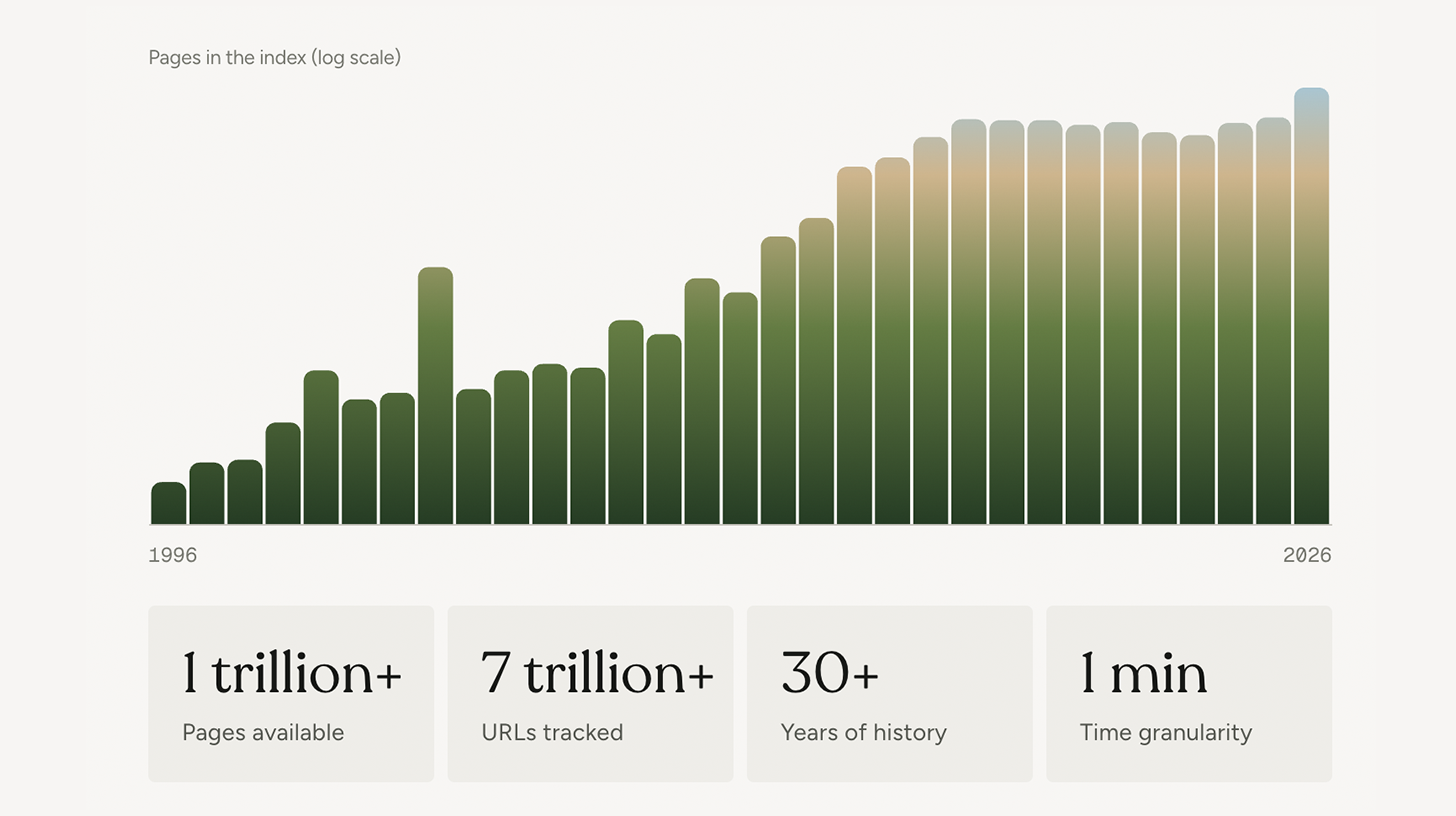
It took under 30 minutes to build. It was 95% accurate on the first try. The cost? 5 cents a game.
Then the snowball started. Once it could mute the ads, I thought about what I do during them: grab my phone and scroll for funny posts to send my buddies. So those went up on the TV. Then I swapped my feed for agents reading the top channels across every network, putting the best 20 posts on screen for the whole family to laugh at. I even swapped the TV announcers for the radio broadcast.
Advertisers are not ready for this.
My experience is my biggest asset, and it’s also my biggest blind spot: I keep assuming complexity and costs that aren’t there. Before you scope version one of anything, ask AI, “What am I assuming is too hard or too expensive to try?”
Developers, I get it: you don’t have the freedom to experiment at work. So pick a silly, almost disposable project and spend $200 blowing through a Fable limit this weekend just to see what happens.
AI TRAINING

The Rundown: In this guide, you’ll use Tasks in Gemini to check the price of one thing you want to buy this Black Friday week. Gemini compares six stores in one table, looks into whether the discount is real, and checks again every day until a date you choose.
Step-by-step:
Go to Gemini on the web or app, sign in with your personal Google Account, and select Task. If you can choose a model, pick Hydrogen, the one free accounts use
Paste the guide's price prompt with your own product and stores, and keep limits: “Use web search only, not this computer or my browser,” no sign-in or purchase
Open the lowest link, then the lowest one where the store itself is the seller. Check the model, that it's new, who sells it, the price with shipping, and the return window
In the same chat, ask: “Is [price] a real discount? Tell me the list price, the lowest price you can find evidence for before this month, and where each number comes from. Use web search only”
If you can wait, ask Gemini to check the same stores every day until December 1 and to tell you only if the price drops below yours
Pro tip: Put your limits in the first message: the exact model, which stores, who must be the seller, and what Gemini must not touch. Then open the store's page before you pay.
PRESENTED BY PIGMENT

The Rundown: Supercell's finance team turned revenue and EBITDA into something colleagues line up to explore. On Dec 10, Pigment reveals how, with AI agents that build models and run analysis for finance, supply chain, sales, and beyond.
This live session covers:
Behind the scenes of Supercell's finance team
How AI agents build models and run analysis from a prompt
A new Pigment launch, revealed for the first time
DARIO AMODEI

Image source: Dario Amodei on X
The Rundown: Anthropic CEO Dario Amodei responded to an Axios report tying him and his staff to the idea of letting superintelligent AI make some of humanity's decisions, calling it “absurd” and accusing rivals of “vibes-based” positioning on human control.
The details:
Axios said some Anthropic staffers back letting superintelligent AI make certain decisions, also pointing to an old slide pitching a “utopia ruled by god in a box.”
Meta's Alexandr Wang publicly rejected a “handover” to AI, and Sam Altman said this month that he wants people “to have the agency over the future.”
Amodei answered on X that turning governance over to AI is a “terrible idea,” comparing it to trading democracy for the speed autocrats promise.
He also said rivals touting “human control and agency” sell similar tools, while only Anthropic has taken a stand on issues like autonomous weapons use.
Why it matters: Anthropic has long paired its safety-first reputation with treating Claude as more than a tool, so it's no shock that some staff are open to AI taking over certain decisions, whatever Amodei says. Insiders could be sounding an alarm over that view, but they've also handed rivals a headline-grabbing talking point against the AI leader.
QUICK HITS
COMMUNITY AI WORKFLOW OF THE DAY
Today’s workflow comes from reader Ben McOsker:
“I built a workflow that turns my brand's colors and fonts into website building blocks that people using screen readers, keyboards, larger text, or high contrast can use with ease. AI does the building, and an automated checker decides whether the work ships.
Before anything is built, Claude writes a short brief. Claude Code builds from the brief, the way a contractor builds from blueprints. Automated checks run every time Claude finishes something, before I look at it. If anything fails, the work is blocked. Claude gets a report showing exactly what failed and why. It fixes the problem and submits again. Only work that passes every check gets in. There's no override button, not even for me.
The result is a free, open-source tool. Give it your brand's colors and fonts, and it produces 18 ready-to-use building blocks, each accessibility-checked and shown in a live showroom with instructions.”
How do you use AI? Tell us for a chance to be featured in the newsletter.
🖥️ Install as App - Claude beta that installs artifacts as Mac and PC apps
🧪 Gemini 4 Neon - Google's powerful new mid-tier model
🚢 Claude Ship - Anthropic's agents that review code and approve routine fixes
🤑 ChatGPT for Sales - Seller toolkit to plug ChatGPT into Salesforce, HubSpot
OpenAI published research showing its GPT-6 class models can invent new proteins with just reasoning and code, matching or beating biology-specific AI models.
Thariq Shihipar, formerly one of the most visible members of the Claude Code team, announced he is joining OpenAI, a month after departing Anthropic.
16-year-old student researcher Cinna Davis said she solved 100+ open math conjectures using GPT-6.2 Astra, with the proofs posted to GitHub but not yet verified.
OpenAI released nine more AI-written math papers to GitHub, including a claimed proof that settles how fast computers can ever multiply big grids of numbers, with Google also posting six new math papers from Cogentic, its Gemini 4-powered research agent.
Meta is negotiating with Amazon to lift the September ban on its Muse agent, with Amazon worried the assistant will route shoppers around its $68.6B ad business.
Read our last AI newsletter: Three xAI founders want AI to predict the future
Read our last Tech newsletter: Cybersecurity gets a $44B merger
Read our last Robotics newsletter: Nvidia’s robot king returns
Today’s AI tool guide: Check Black Friday prices with Gemini Tasks
RSVP to Nov. 30 workshop with Nate: Catch up on a year of AI in 90 minutes
That's it for today!Before you go we’d love to know what you thought of today's newsletter to help us improve The Rundown experience for you. |
|
See you soon,
Rowan, Zach, Shubham, Jennifer, and Nate — the humans behind The Rundown