AI spots signs of heart disease in routine ECGs within seconds
Imperial researchers report AI can flag signs of heart disease in routine ECGs within seconds. NHS testing will assess its value for clinical follow-up.
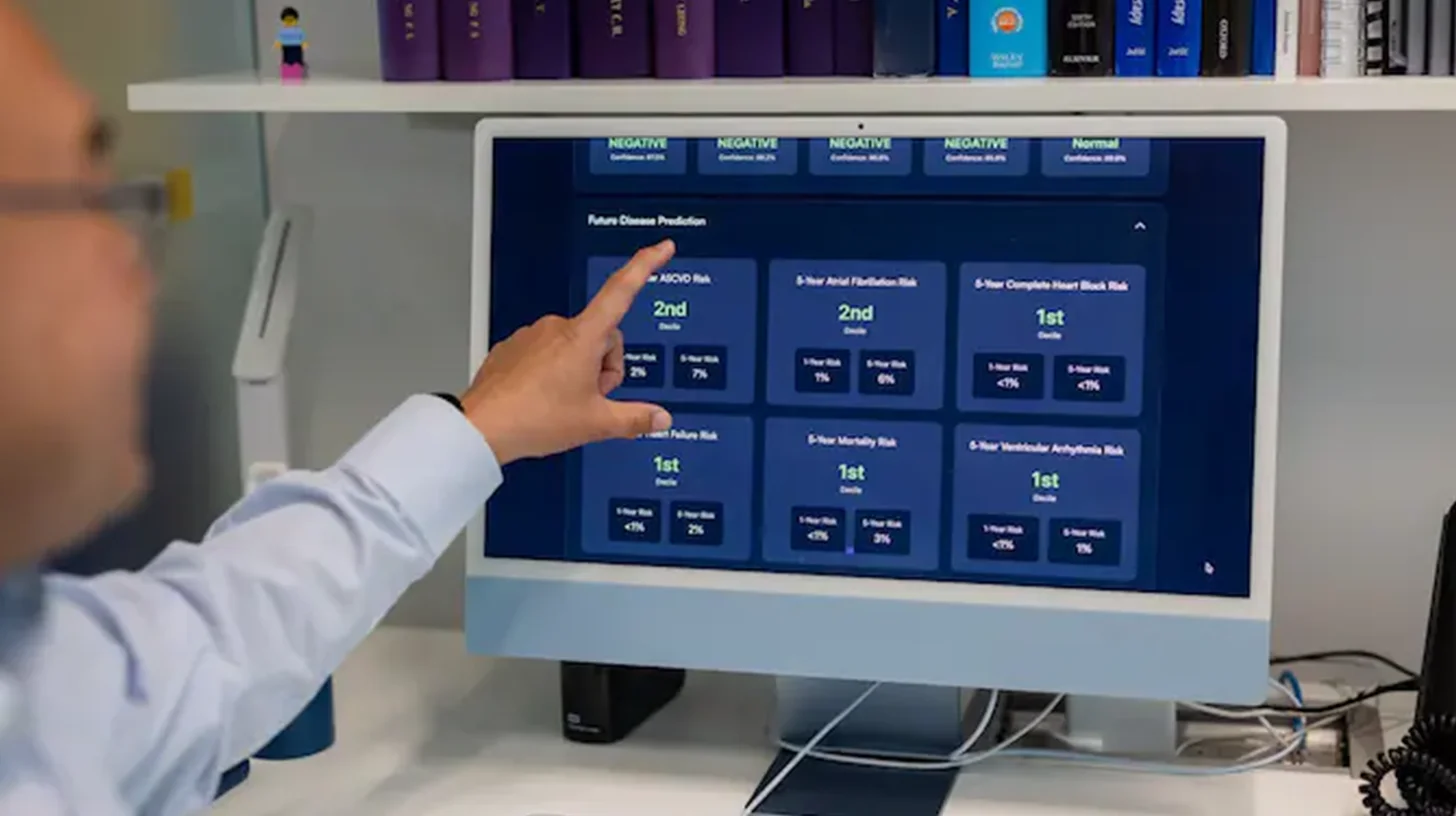
Imperial College London researchers have developed an AI model that reportedly reads a routine electrocardiogram, or ECG, in under two seconds and flags signs of reduced heart pumping function and aortic valve disease. The prospect is an additional way to identify patients who need further investigation from a test clinicians already collect.
As covered in The Rundown’s September 1 newsletter, the researchers were preparing to test the approach in NHS care. The Guardian reported on August 31 that the tool detected the targeted conditions in up to 81% and 90% of cases. Subsequent reporting adds important detail to those headline figures.
What the research found
The British Heart Foundation subsequently said on September 2 that the model was developed with 10.6 million ECGs and accompanying clinical reports. It described testing in two cohorts containing 5,442 and 61,520 patients.
According to BHF, detection of reduced pumping function reached 77% and 81% in those cohorts, respectively. Detection of aortic stenosis, a narrowing of the aortic valve, reached 90% and 80%. The headline figures therefore select the strongest result for each condition from different patient groups. These endpoints also cover specific problems within the broader categories of heart failure and valve disease.
BHF cautioned that the tool cannot independently confirm or exclude disease. Its proposed role is to flag patients who may need an echocardiogram, an ultrasound examination of the heart.
In the same September 2 update, BHF said testing involving 590 NHS patients was underway across London and Bristol. Routine NHS use could be about two years away, according to the team’s forecast. That timeline remains a research ambition; approval and adoption are uncertain.
Why it matters
The immediate opportunity is to find more useful information in tests that are already part of care. Talk of AI eventually curing disease can obscure this more practical possibility: helping clinicians notice a warning sign early enough to investigate it. The ECG model offers a promising example, with clinical testing still needed to establish whether those flags improve care.
BHF estimates that approximately one billion ECGs are performed worldwide each year. Adding a screening layer to those recordings could help identify problems beyond the reason a patient received the test. For someone whose ECG raises an unexpected concern, the practical benefit could be a referral for a heart ultrasound or a change in the urgency of follow-up.
The two-second processing claim is only one part of that pathway. A patient benefits when a useful flag reaches a clinician and leads to appropriate investigation. Whether the system can shorten that journey depends on how hospitals review alerts and arrange confirmatory scans. Faster analysis alone cannot establish a reduction in waiting times.
There is also a tradeoff in how readily the model raises an alert. Missed disease could delay investigation; false alerts could lead to unnecessary scans and add pressure to services. The reported detection percentages do not establish how often alerts would prove unfounded in routine care. Clinical testing needs to show whether the resulting referrals help patients and how much additional work they create.
The writer’s “second set of expert eyes” analogy fits the intended supporting role. A related example came in UCLH’s August 27 announcement of AI highlighting critical anatomy in live brain surgery video while the surgeon retained control. Both applications aim to make useful information more visible so clinicians can decide what to do. UCLH’s ongoing trial still has to assess feasibility, safety and outcomes.
For the ECG system, the next meaningful evidence will come from what happens after an alert: whether the right patients receive confirmatory testing sooner, whether treatment changes, and whether outcomes improve. The detection results justify testing that possibility in care.
Sources & further reading
This story builds on reporting from The Rundown newsletter on September 1, 2026.